How to Reduce Screen Time Before Bed
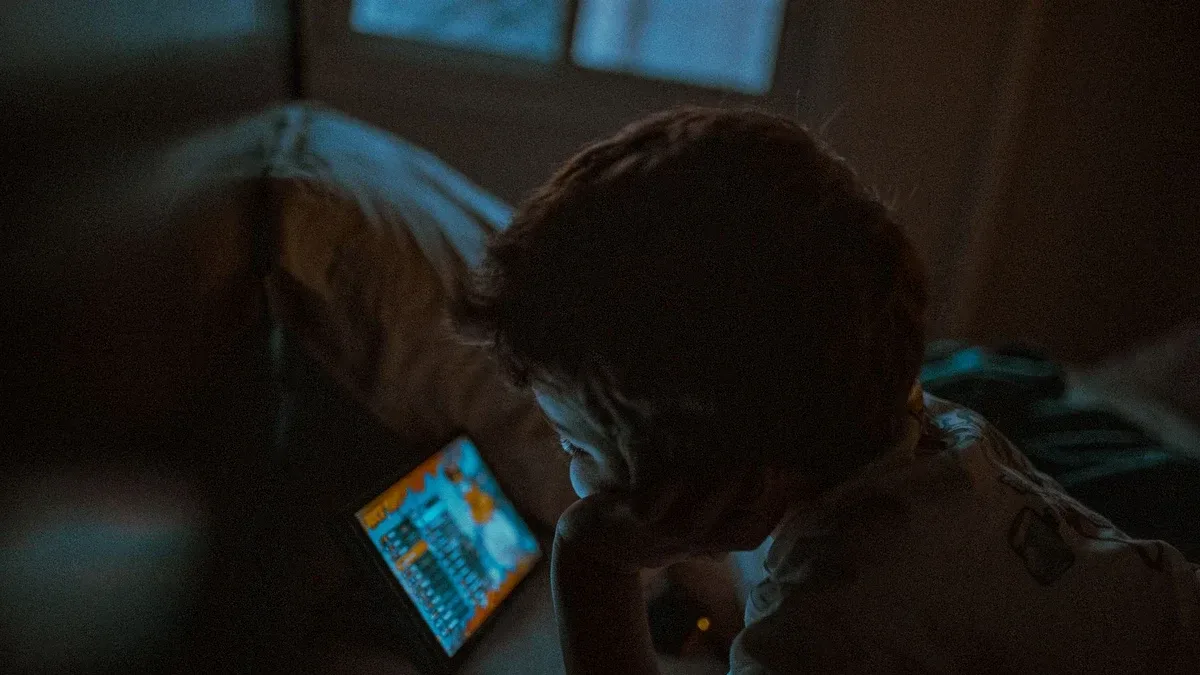
People who use a phone within thirty minutes of bedtime are about twice as likely to report poor sleep quality as people who put the phone down earlier. The problem is not a lack of discipline. Phones are built to be picked up, and a phone on the nightstand wins against good intentions almost every night.
So the fix is not trying harder. The fix is changing the setup: where the phone charges, what the phone itself blocks after a set time, and what fills the last hour instead. Get those three right and screen time before bed falls on its own.
Why screens at night hit sleep three ways
The first channel is light. Screen light, especially the blue range from LED displays, suppresses melatonin, the hormone that makes you sleepy. In a controlled study, people who read on a light-emitting e-reader before bed took longer to fall asleep and were less alert the next morning than people who read a printed book.
The second channel is content. News, arguments in comment threads, work email, and competitive games all keep the brain alert, and no filter fixes that. A calming nature documentary and a stressful inbox sit at opposite ends of this scale, even on the same screen.
The third channel is time itself. Autoplay and infinite scroll push bedtime later in small increments that never feel like a decision. Most late nights are not chosen. They are accumulated, one more video at a time.
Move the charger out of the bedroom
This is the single change with the largest effect. Charge the phone overnight in the kitchen or living room, and put a basic alarm clock on the nightstand instead. The phone alarm is the main reason the phone sleeps next to the bed, and a ten-dollar clock removes it.
With the phone in another room, three problems disappear at once: the last scroll in bed, the 2 a.m. notification check, and the first scroll of the morning. If the phone genuinely has to stay in the room, put it across the room rather than within reach, face down, with Do Not Disturb scheduled to start an hour before bed.
Set a digital curfew & let the phone enforce it
Pick a cutoff sixty to ninety minutes before bed. Then make the phone hold the line, because a rule you have to police yourself fails on tired evenings.
On an iPhone:
- Open Settings, then Screen Time, then Downtime.
- Schedule Downtime to start at your cutoff time and end at your wake time.
- Under Always Allowed, keep only the apps you truly need, such as Phone and Messages.
- Add App Limits for social media and video apps as a second layer.
On Android:
- Open Settings, then Digital Wellbeing, then Bedtime mode.
- Set the schedule to match your cutoff, and turn on Do Not Disturb for Bedtime mode.
- Use app timers on your biggest time sinks so they close themselves at the limit.
One more setting helps on both platforms: grayscale. A black-and-white screen is far less tempting than a colorful feed. On iPhone it sits under Accessibility, Display & Text Size, Color Filters. On Android, Bedtime mode can switch it on automatically.
If screens stay on, cut the damage
A full cutoff is the goal, but harm reduction beats giving up. If a screen stays on in the evening, do four things:
- Turn on the night mode or blue light filter and schedule it from sunset, set to its warmest level.
- Lower brightness manually. Total brightness and how close the screen is to your face matter as much as the color of the light.
- Keep content passive. A podcast or an audiobook with a sleep timer stimulates far less than a feed or a game.
- Read on paper or on an e-ink reader without a front light instead of a phone or tablet.
Blue light glasses sit at the bottom of this list on purpose. The evidence for them is limited, major ophthalmology bodies have not endorsed them, and they do nothing about stimulating content or a bedtime that keeps sliding. A cutoff beats glasses every time.
Fill the last hour with something else
An empty hour gets refilled by the phone. The cutoff holds when the hour already has a content of its own. Options that work because they are genuinely absorbing, not just worthy:
- A paper book, the classic swap, with no notifications attached.
- An audiobook or podcast with a sleep timer set to stop at the end of a chapter.
- A shower, light stretching, or getting clothes and a bag ready for the morning.
- A short journal entry or a written list for tomorrow, which parks the thoughts that otherwise get typed into a phone.
- Conversation, cards, or a board game if other people are in the house.
Keep the home lighting warm and dim during this hour as well. Bright ceiling lights work against the same melatonin you are protecting from the phone.
The 7-night ramp
Cold turkey fails for most people because the jump is too large. Shrink the window gradually instead:
- Nights 1 and 2: screens off thirty minutes before bed, phone charging outside the bedroom from night one.
- Nights 3 and 4: extend the cutoff to forty-five minutes, and switch on Downtime or Bedtime mode.
- Nights 5 to 7: reach sixty minutes or more, with the swap activity settled into the hour.
Track one thing only: roughly how long it takes you to fall asleep. Most people see that number shrink by night three or four, and that visible result is what carries the habit past the first week.
FAQ
How long before bed should I stop using screens?
Sixty to ninety minutes is the target worth aiming for. Thirty minutes is the minimum that still makes a measurable difference. If you currently scroll until lights out, even the thirty-minute version is a real improvement.
Is night mode enough on its own?
No. Night mode reduces one channel, the light. It does nothing about stimulating content, screen brightness up close, or autoplay pushing bedtime later. Use it as a backup layer under a real cutoff, not as the cutoff.
Does TV count as screen time before bed?
It counts, with two differences. A TV sits across the room, so its light reaches your eyes more weakly than a phone held close. The bigger TV problem is content and autoplay carrying you past bedtime. Keep the TV out of the bedroom, or set its sleep timer to end the episode at your cutoff.
Do blue light glasses work?
The evidence is limited and mixed, and they have not been endorsed by major ophthalmology organizations. At best they soften the light channel. They do nothing for content or for a sliding bedtime, so treat them as a minor extra, never the main strategy.
The one change to make tonight
If you do only one thing from this page, move the charger. Phone in the kitchen, alarm clock by the bed, cutoff set in the phone’s own settings. That single rearrangement removes the temptation instead of fighting it, and every other step on this page gets easier once the phone is out of the room.